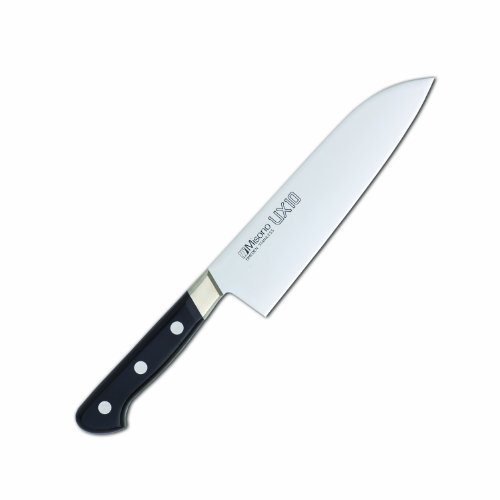
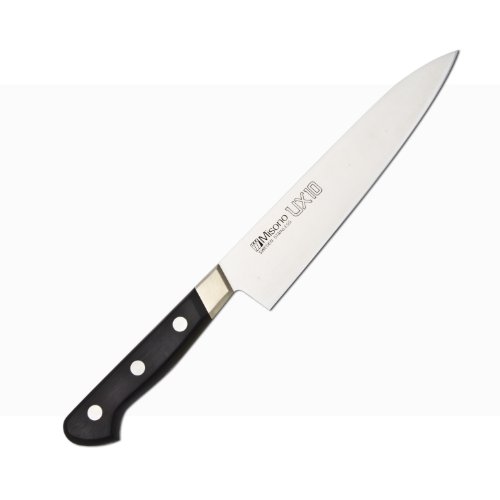
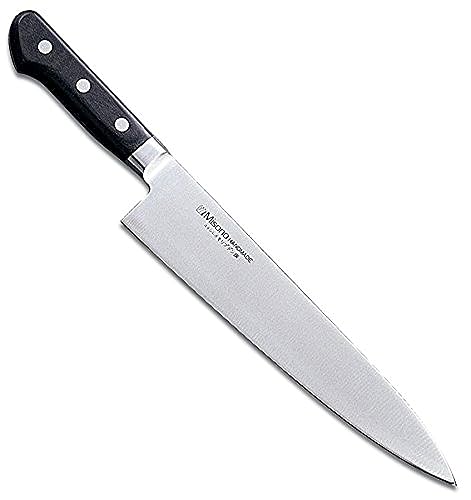
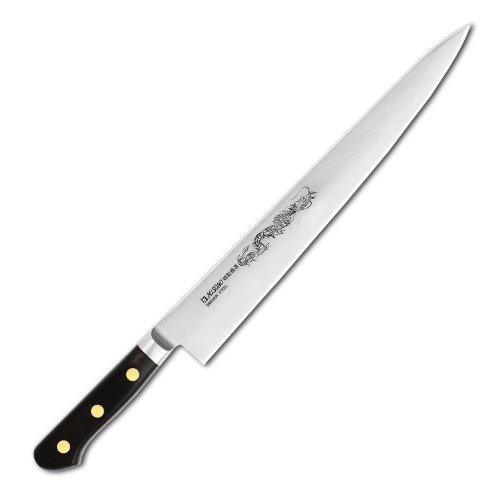
Misono UX10 Santoku 7.0″ (18cm) - Right
Price: $225.63
ASIN: B000XSZ7SE
Product Description
This Misono UX10 Santoku knife offers a precise 7.0-inch blade, expertly crafted for right-handed use in your kitchen.
Meet the Misono UX10 Santoku 7.0″ (18cm), a precision Japanese kitchen knife built for cooks who expect exceptional sharpness and effortless control. Crafted from high-carbon molybdenum steel and hand-finished with a refined edge, this right-handed santoku slices through vegetables, herbs, fish, and boneless meats with a clean, almost silent glide. Explore the full range of Japanese craftsmanship at Misono, where traditional blade-making meets modern performance.
The UX10 features a lightweight, balanced Western-style handle that sits comfortably in the hand for long prep sessions. Its thin, tapered blade reduces friction, so ingredients release cleanly from the edge rather than sticking or tearing. The santoku's broad profile and gently curved belly make it ideal for the classic chopping rocking motion, while its shorter length offers agility for precise tasks in tight spaces.
Whether you are a home cook refining your technique or a professional seeking a dependable everyday workhorse, this knife delivers consistent results. Its corrosion-resistant steel holds
Frequently Asked Questions
What is the Misono UX10 Santoku 7.0″ knife best used for?
The Misono UX10 Santoku is a versatile all-purpose kitchen knife well suited for slicing, dicing, and mincing vegetables, meat, and fish. Its shorter blade and balanced profile make it comfortable for precise, everyday prep work.
Is this knife designed for right-handed or left-handed users?
This model is the right-handed version, meaning its single-bevel edge is ground for right-handed use. Left-handed cooks should look for the left-handed variant of the UX10 for proper cutting performance.
What steel is used in the Misono UX10, and how should I care for it?
The UX10 uses molybdenum stainless steel, offering excellent sharpness and corrosion resistance. Hand wash and dry it promptly after use, avoid the dishwasher, and use a wood or plastic cutting board to preserve the edge.
How often will the knife need sharpening?
Sharpening frequency depends on how often you cook and what you cut, but most home cooks sharpen every few months. Regular honing between sharpenings helps maintain the edge and extends the time between professional or whetstone sharpening sessions.